
Some links on this page earn us a commission if you buy after clicking. It changes neither the ranking nor what is written here — and we say below what we were unable to check.
Living with a cat pushes you to act the moment anything happens. Yet a good part of what settles a cat consists of not intervening.
1. A cat that sleeps a lot is not necessarily bored
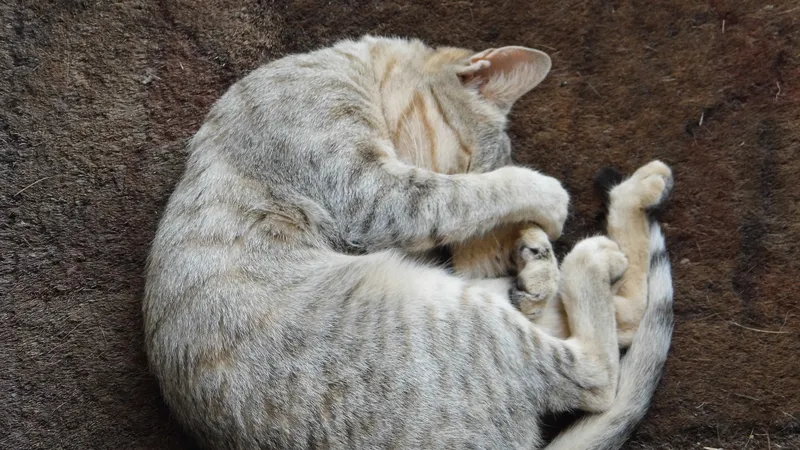
Sleep fills a large part of a healthy cat's day, and an adult cat that sleeps in stretches, wakes, stretches out, grooms and goes again is doing exactly its job.
What deserves your attention is not the amount of sleep but what surrounds it: a cat that no longer plays at all, that no longer responds to what used to interest it, or that sleeps in an unusual, rigid position is not saying the same thing as one snoring on the radiator.
2. Something new it ignores: leave the object, withdraw the attention
A bed, a tunnel, a toy put down in the middle of the room and snubbed for a week: the usual response is to present it, waggle it, place the cat inside. That is the surest way to finish it off.
Leave the object where it is, stop showing it, and go and do something else. A cat explores what has stopped being an event.
3. After an upset, withdrawal is the treatment
Back from the vet, a noisy visit, building work in the block: a cat that keeps to itself is handling the situation with the only tool it has.
Pulling it out of its hiding place, stroking it anyway or following it from room to room draws the episode out instead of shortening it. Leave the door open, water within reach, the litter tray reachable, and get on with the house as usual.
One detail is worth knowing: after a trip to the vet, the other cat in the house may react to the smell that comes back with it. There too, the matter settles better without a referee.
4. Grooming, and how far to leave it alone
A cat spends a good part of its day grooming, and watching it lick itself at length is not in itself a reason to step in.
The line is visible to the eye: as soon as you see a bare patch, red skin, a scab or a wound, or the opposite, a coat no longer looked after at all and turning dull and matted, this is no longer a habit, it is a reason to consult.
5. A relationship cannot be forced
With a cat that avoids you, insisting works against you. A fixed stare, a hand reaching for the head and being picked up are three things that, to a cat, resemble a predator's approach.
The technique that works is dull to describe: sit down, do something else, do not stare, and let it come. It is also the only one that leaves you a steady relationship afterwards.
6. What not to buy until you understand the problem
Faced with a cat urinating outside the tray, calling at night or hiding away, the common response is to order something: a fountain, a diffuser, a toy, a second bed. The purchase reassures the person making it.
The trouble is that it muddies the reading. If three things change in the same week, you will never know which one counted, and you will start again next time.
Ask yourself one question before ordering: what does this object replace, and what tells me that is what is missing. With no answer, the only genuinely useful spend is the consultation, because several of these behaviours have a medical cause first.
7. Where doing nothing becomes a mistake
Doing nothing is never the right call in the face of certain signs: a cat going to the tray with no result or straining, a male cat especially, a cat that has stopped eating, that breathes fast or with its mouth open, that vomits repeatedly, that limps or hides after a fall, or whose behaviour changes abruptly with no visible cause.
These situations are not watched to see how they develop, and they are not fixed by moving furniture. They are phoned in.
The rest of the time, attentive waiting remains the best thing you can offer: watching without stepping in takes more nerve than acting, and usually helps more.