
Some links on this page earn us a commission if you buy after clicking. It changes neither the ranking nor what is written here — and we say below what we were unable to check.
We worry about an animal that spends the day lying down, and we set about entertaining it. That worry is sometimes right, and often misplaced.
1. Rest is the normal setting, not an alarm
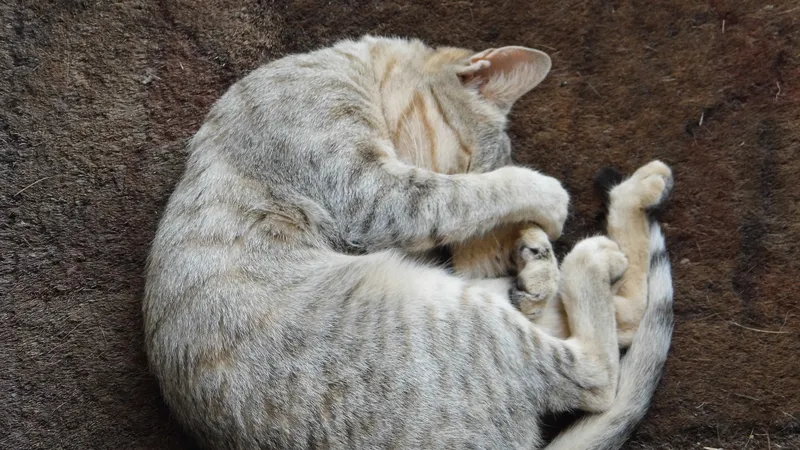
Dogs and cats spend a large part of the day asleep or dozing. An animal lying down while you work is doing exactly what its species does.
The discomfort is usually ours. We measure a good day by how full it was, and we push that measure onto a creature that does not use it.
Before looking for an explanation for the inactivity, check that there is something to explain. A calm animal that eats, and gets up keenly when the lead comes out or the bowl moves, is not presenting a problem.
2. Boredom has a shape, and it is not stillness
A bored animal rarely does nothing. It usually does too much: it repeats, it insists, it demands, it walks the same route again, it busies itself with objects that were never meant for it.
Repetition with no visible purpose is the most recognisable sign. It is not the absence of activity, it is activity running in a loop.
A genuinely unoccupied animal also keeps trying to involve you, over and over, including by means that irritate you. The irritation is part of the message.
3. What has changed matters more than what you see
A cat that has always slept a great deal teaches nobody anything. The same cat, if it was sleeping markedly less last month, is telling you something.
It is the gap against its own normal that informs you, never a comparison with another animal or with an average read somewhere.
Keep the record simple: where it sleeps, when it gets up, what gets it up. Three lines are enough, and they make a future change readable.
4. The stillness that means ring rather than wait
Some elements move the question off behavioural ground at once: refusing food or water, struggling to get up, holding an unusual position, breathing that has changed, no reaction to what always got a reaction.
In those cases the right move is not to watch one more day to be sure. It is to ring.
An animal hides pain, and hides it well. How quiet the signs are says nothing about how serious the thing underneath is.
5. Occupying an animal is not the same as stirring it up
The reflex answer to assumed boredom is to add stimulation: more play, more outings, more objects, more noise. That sometimes produces a tired animal that is no more satisfied than before.
What genuinely occupies an animal tends to involve scent, chewing, rummaging, long stretches of watching. Those are slow activities, and from the outside they do not look like much.
A bowl served differently, a box to explore, a window it can reach: those often work better than half an hour of running.
6. Doing nothing is sometimes the right decision
When everything else is normal, the most useful intervention is often to leave the animal alone. The need to act is ours.
An animal that rests without being approached builds something invisible and easily undone: the confidence that it can settle without being disturbed.
It is a conclusion that suits nobody, because it converts into neither a purchase nor a programme. It remains the right one in a great many cases.